Compare Live Mortgage & Home Equity Rates
Compare current APRs, points, fees, and estimated monthly payments from participating lenders below.
Mortgage rates
Minimum Credit Score to Refinance a Mortgage
Quick Answer: The minimum credit score to refinance a mortgage varies by loan type. FHA loans accept scores as low as 580, while conventional loans typically require at least 620. VA loans have no official minimum, but most lenders look for 580–620. Borrowers with scores between 580 and 620 may still qualify for refinancing, especially through government-backed programs.
Refinancing your mortgage can lead to lower monthly payments, reduced interest rates, or even a shorter loan term. However, understanding the minimum credit score to refinance is crucial before starting the process. Lenders use your credit score as a key factor in determining approval and loan terms, so knowing the credit score requirements for refinance options can help you plan effectively.
This guide covers the credit score requirements refinance options by loan type, how your credit score impacts your interest rate, and actionable steps to improve your score if needed. Additionally, we will discuss the minimum credit score to refinance various loan types to give you a clearer picture.
Credit Score Minimums by Loan Type
Different loan programs have varying credit score standards. Here's a breakdown of refinance credit requirements by loan type to help you determine the best fit for your financial situation, including the minimum credit score to refinance.
FHA Refinancing
- Minimum Score: 580 (some lenders accept 500 with 10% equity)
- Best For: Borrowers with credit challenges or limited financial flexibility
- Key Benefit: Flexible underwriting guidelines make FHA loans accessible to credit-challenged borrowers.
Example: If your credit score is 550 and you have 15% equity in your home, you could qualify for an FHA refinance. However, expect a higher interest rate and additional lender requirements.
Did You Know? FHA loans are among the most accessible refinance options, with over 20% of refinances in the U.S. being FHA-backed, especially for borrowers with lower credit scores. Understanding the minimum credit score to refinance can help you navigate these options.
VA Refinancing (Veterans Only)
- Minimum Score: No official VA minimum, but most lenders require 580-620
- Best For: Veterans, active-duty military, and eligible spouses
- Key Benefit: No private mortgage insurance (PMI) and competitive rates.
This is especially relevant for those interested in lowest credit score to refinance.
Example: A veteran with a credit score of 620 may qualify for a VA refinance without needing PMI, which can save hundreds of dollars monthly.
Did You Know? According to the Consumer Financial Protection Bureau (CFPB), VA loans have some of the lowest foreclosure rates due to their favorable terms and benefits. Knowing the minimum credit score to refinance can help veterans make informed decisions.
Conventional Refinancing
- Minimum Score: 620 (most lenders prefer 640+)
- Best For: Borrowers with strong credit and at least 20% home equity
- Key Benefit: Avoids upfront mortgage insurance premiums.
Pro Tip: If you’re close to reaching 20% equity in your home, consider waiting until you do. This can eliminate private mortgage insurance (PMI), saving you hundreds of dollars annually.
Expert Tip
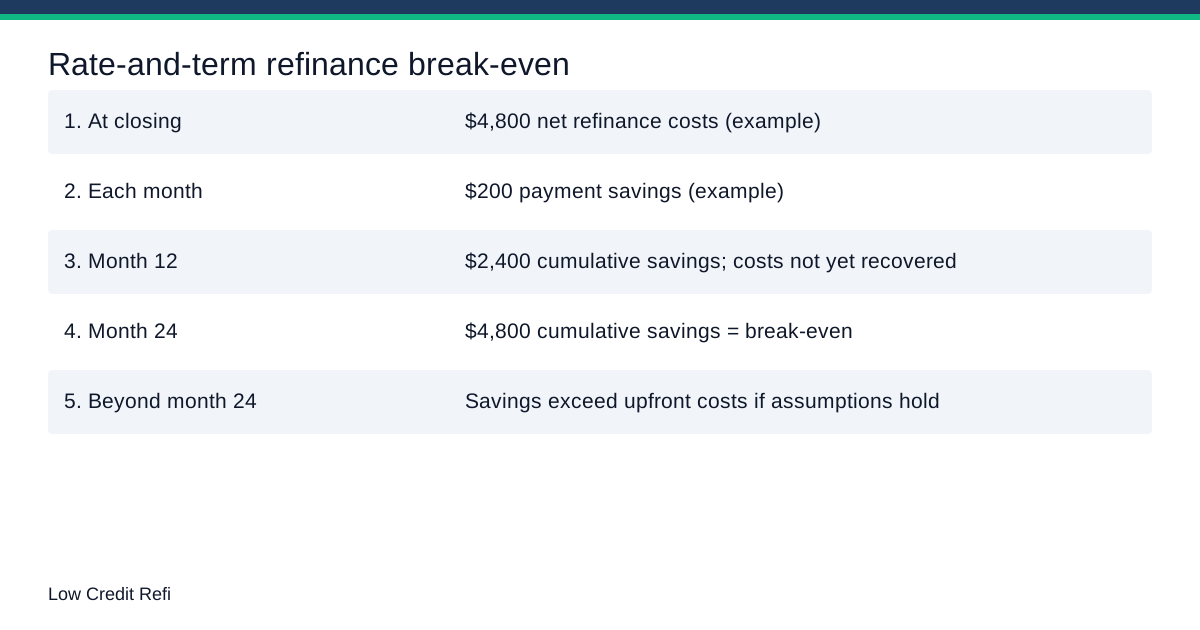
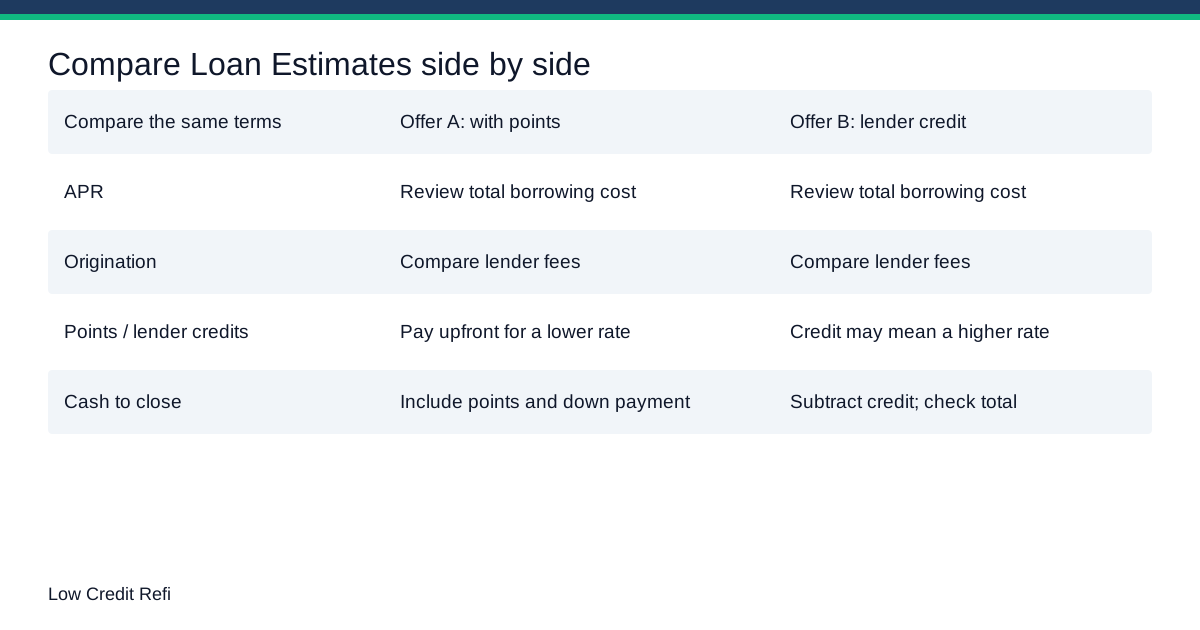
Compare Loan Estimates for the same loan type and term. Include closing costs when calculating whether refinancing saves money.
People looking into refinance credit requirements will find this information valuable.
Example: A homeowner with a credit score of 740 and 25% equity in their home may qualify for a 5.5% interest rate on a conventional refinance, compared to a borrower with a 620 score who might pay closer to 6.75%. Understanding the minimum credit score to refinance can help you strategize.
USDA Refinancing
- Minimum Score: 640 (some lenders accept 580)
- Best For: Homeowners in rural or suburban areas
- Key Benefit: No down payment or equity required for USDA Streamline Refinance.
Example: If you own a home in a USDA-eligible area with a credit score of 600, you may qualify through a lender specializing in flexible USDA loan requirements.
Did You Know? USDA loans are one of the few loan types that allow refinancing without equity, making them ideal for homeowners in rural areas with limited financial resources. Knowing the minimum credit score to refinance can open doors for many.
Non-QM Refinancing
- Minimum Score: Varies by lender, with some accepting scores as low as 500
- Best For: Self-employed borrowers, real estate investors, or those with unique financial circumstances
- Key Benefit: Flexible income verification and credit requirements.
Example: A self-employed entrepreneur with a credit score of 520 and substantial savings might qualify for a Non-QM refinance, although they’ll likely face higher rates compared to traditional loans. Understanding the minimum credit score to refinance can help you identify suitable options.
How Your Credit Score Affects Your Refinance Rate
Your credit score plays a critical role in determining your interest rate. Lenders use loan-level pricing adjustments (LLPAs) to assign rates based on risk, meaning lower scores lead to higher interest rates. The minimum credit score to refinance can significantly impact your financial outcomes.
| Credit Score | Rate Adjustment (%) |
|---|---|
| 760+ | Best available rate |
| 720-759 | +0.125% to +0.25% |
| 680-719 | +0.25% to +0.50% |
| 640-679 | +0.50% to +0.75% |
| 620-639 | +0.75% to +1.25% |
| 580-619 | +1.25% to +2.00% |
Example: A borrower with a 760+ credit score might secure a 5.5% interest rate, while someone with a 620 score might pay 6.75% or higher. Over a 30-year term, this difference could cost tens of thousands of dollars.
Did You Know? A 1% difference in interest rates on a $250,000 mortgage can result in over $50,000 in additional payments over a 30-year term. Knowing the minimum credit score to refinance can help you avoid costly mistakes.
The Reality of Lender Overlays
While loan programs set minimum scores, lenders often impose stricter requirements, known as "overlays." These overlays can make qualifying more difficult, even if you meet the program's basic criteria.
Common Lender Overlays Include:
- Higher credit score minimums (e.g., requiring 640 instead of 580)
- Stricter debt-to-income (DTI) ratio limits
- Additional cash reserves
- More detailed documentation for income verification
Improving Your Credit Score Before Refinancing
If your credit score is below the required threshold, focus on improving it before applying. Even a slight increase can lead to better rates and terms, making it easier to meet the minimum credit score to refinance.
Quick Wins (1-2 Months)
- Pay down credit card balances: Keep utilization below 30% for a quick score boost.
- Dispute credit report errors: Review your credit report for inaccuracies and dispute any errors.
- Become an authorized user: Ask a family member with excellent credit to add you as an authorized user on their account.
Medium-Term Strategies (3-6 Months)
- Consistently pay bills on time: Payment history accounts for 35% of your credit score.
- Avoid opening new accounts: Hard inquiries can temporarily lower your score.
- Keep old accounts open: Length of credit history impacts your score, so avoid closing older accounts.
Long-Term Improvements (6-12 Months)
- Build a positive payment history: Time is a key factor in improving your score.
- Diversify your credit mix: Consider adding installment loans or other types of credit.
What If Your Score Is Too Low?
If your credit score is below 580, refinancing may still be possible, but it will require extra effort and flexibility. Knowing the minimum credit score to refinance can help you set realistic goals.
- Focus on Credit Repair: Work on increasing your score over the next 6-12 months through consistent payments and debt reduction.
- Consider a Co-Signer: A co-signer with a higher credit score can help you qualify, but their credit will also be at risk.
- Explore Non-QM Lenders: These lenders specialize in borrowers with unique financial situations but come with higher interest rates.
- Seek Credit Counseling: A credit counselor can offer personalized advice and help you create a plan to improve your score.
Final Thoughts on the Minimum Credit Score to Refinance
Understanding the minimum credit score to refinance varies by loan type and lender, but improving your score can open doors to better rates and terms. Whether you’re exploring FHA, VA, USDA, or conventional refinancing, knowing the credit score requirements refinance options can help you make informed decisions.
Take the time to evaluate your financial situation, compare lender offers, and work on improving your credit where needed. Refinancing can be a powerful tool for achieving financial stability and long-term savings, and the right preparation can make all the difference. Remember, the minimum credit score to refinance is just the beginning of your journey toward better financial health.
Frequently Asked Questions
Can I refinance my mortgage with a credit score of 580?
Yes, you may be able to refinance with a credit score of 580, particularly through an FHA loan. FHA refinancing allows scores as low as 580, and some lenders may accept 500 with at least 10% equity. However, you may face higher interest rates compared to borrowers with higher scores.
What is the minimum credit score for a conventional refinance?
The minimum credit score for a conventional refinance is typically 620, though many lenders prefer 640 or higher. Borrowers with scores below 620 may need to explore government-backed options like FHA or VA loans. Conventional loans also require at least 20% equity to avoid private mortgage insurance.
Does a VA refinance have a minimum credit score requirement?
The VA does not set an official minimum credit score for refinancing, but most lenders require a score of at least 580 to 620. VA loans offer benefits like no private mortgage insurance and competitive rates, making them a good option for eligible veterans and service members with moderate credit.
How can I improve my credit score to qualify for a better refinance rate?
To improve your credit score, focus on paying bills on time, reducing credit card balances, and avoiding new credit inquiries. Check your credit report for errors and dispute any inaccuracies. Even a small score increase can help you qualify for lower interest rates on a refinance.
Key Takeaways
- Understanding your options for minimum credit score to refinance is the first step
- Explore related options like credit score requirements refinance
- Explore related options like lowest credit score to refinance
- Getting pre-qualified helps you understand your real options

