Compare Live Mortgage & Home Equity Rates
Compare current APRs, points, fees, and estimated monthly payments from participating lenders below.
Mortgage rates
Refinancing With a 580-620 Credit Score: Complete Guide
Quick Answer: Yes, refinancing with a credit score between 580 and 620 is possible through government-backed programs like FHA loans, which have flexible credit requirements. Lenders focus on your current financial stability, including income and debt-to-income ratio, rather than past credit issues. Exploring FHA streamline or rate-and-term refinance options can help you secure better terms.
Refinancing your mortgage with a credit score between 580 and 620 is absolutely possible, though it requires understanding your options and choosing the right loan program. In this comprehensive guide, we will walk you through everything you need to know about refinancing with a lower credit score, including the best loan programs available, what lenders really look for, and proven strategies to improve your approval odds when refinancing with 580 credit score.
Understanding Your Credit Position in the Mortgage Market
A credit score in the 580 to 620 range places you in what the mortgage industry categorizes as the subprime segment. While this terminology might sound discouraging, it simply means you fall outside the traditional conventional loan parameters. The good news is that several government-backed and specialized loan programs exist specifically to help borrowers in your situation achieve their refinancing goals, including options for refinancing with 580 credit score.
Why Is Your Credit Score in This Range?
Credit scores in this range typically result from past financial challenges such as:- Late payments on credit cards or loans, which stay on your credit report for up to seven years.
- High credit utilization, meaning you’re using a significant percentage of your available credit. Ideally, you should aim to keep usage below 30%.
- Collections accounts or charge-offs that may still appear on your credit report and lower your score.
- Limited credit history, which makes it harder for credit bureaus to assess your creditworthiness.
The Mortgage Landscape Today
The mortgage industry has evolved significantly since the 2008 financial crisis. Regulatory changes and new loan programs have opened doors for borrowers across the credit spectrum. For example:- In 2026, the average credit score for mortgage approvals hovered around 720, but FHA and VA programs routinely approve borrowers with scores in the 580-620 range, making refinancing with 580 credit score feasible.
- Some Non-QM lenders report that nearly 25% of their borrowers have credit scores below 620, showcasing the growing availability of alternative options.
Your Best Refinancing Options for Low Credit Scores
Refinancing with a 580 credit score—or slightly higher—requires exploring loan programs designed with flexibility in mind. Here are some of the most viable options:
FHA Refinancing Programs
The Federal Housing Administration (FHA) continues to be the go-to choice for borrowers with credit scores between 580 and 620. FHA loans offer some of the most lenient credit requirements, making homeownership and refinancing accessible for lower-credit borrowers, including those focused on refinancing with 580 credit score.
1. FHA Rate-and-Term Refinance
This program allows you to replace your current mortgage with a new FHA loan featuring better terms, such as a lower interest rate or shorter loan term.- Minimum credit score: 500 (with 10% equity) or 580 (with standard 3.5% equity).
- Loan-to-value ratio (LTV): Typically up to 97.75%, depending on your home equity.
2. FHA Streamline Refinance
If you already have an FHA loan, this program offers a simplified way to refinance.- No appraisal required: In most cases.
- Minimal documentation: No need to verify income or employment.
- Net tangible benefit: Must demonstrate financial savings, such as a reduced interest rate or monthly payment.
3. FHA Cash-Out Refinance
Need to tap into your home equity? The FHA cash-out refinance allows you to borrow up to 80% of your home’s value.- Minimum credit score: 580 for most lenders.
- Eligibility requirements: You must have lived in the home for at least 12 months.
VA Refinancing for Veterans and Service Members
If you’re a veteran or active-duty service member, VA refinancing options are among the most favorable. The Department of Veterans Affairs does not set a minimum credit score, though most lenders prefer scores in the 580-620 range, making refinancing with 580 credit score a viable option for many veterans.
This is especially relevant for those interested in refinance low credit score.
1. VA Interest Rate Reduction Refinance Loan (IRRRL)
This streamlined program is ideal if you already have a VA loan.- Minimal paperwork: No income verification or appraisal needed in most cases.
- Cost savings: Designed to lower your interest rate or monthly payment.
2. VA Cash-Out Refinance
Access up to 100% of your home’s value with this flexible program.- Uses: Debt consolidation, home improvements, or other financial needs.
- No PMI: VA loans do not require private mortgage insurance, even with high LTV ratios.
Non-QM and Alternative Lending Solutions
Non-Qualified Mortgage (Non-QM) loans cater to borrowers who don’t meet conventional or government-backed loan standards. These lenders evaluate your application using alternative criteria, such as:
- Bank statement programs: For self-employed borrowers or those with irregular income.
- Asset-based lending: Focuses on your savings or liquid assets instead of your income.
- Flexible credit requirements: Some lenders accept scores as low as 500, provided other factors (e.g., equity, income) are strong.
What Lenders Really Evaluate Beyond Your Credit Score
Your credit score is important, but it’s not the only factor lenders consider when deciding whether to approve your refinance application.
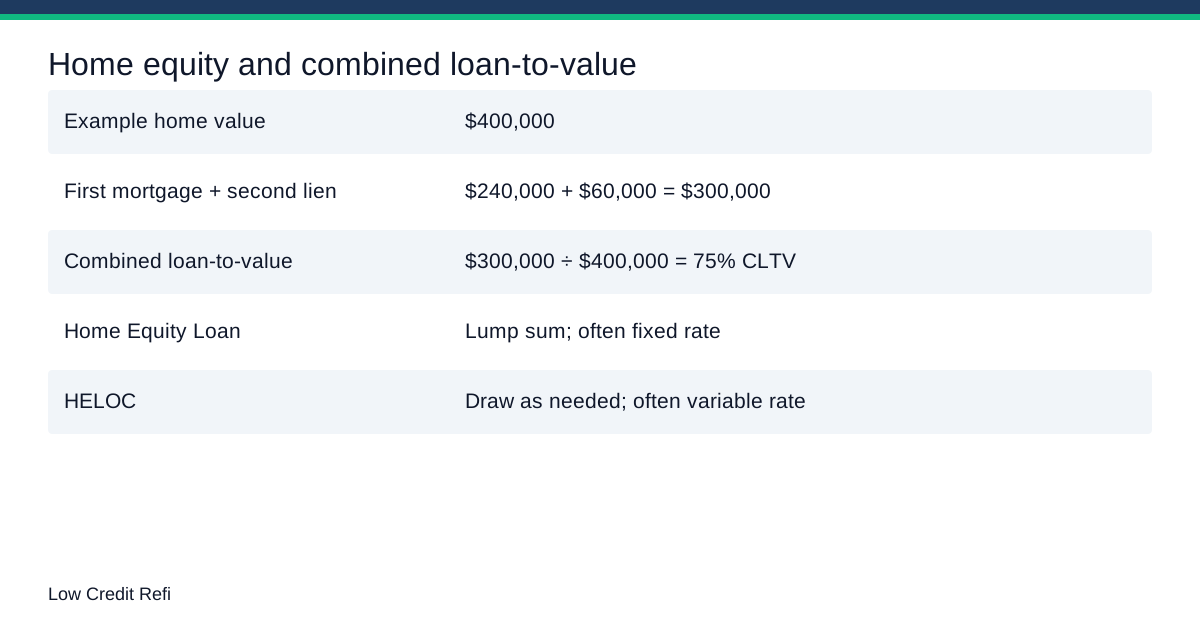
1. Home Equity and Loan-to-Value Ratio (LTV)
The more equity you have in your home, the less risk you pose to lenders.- High equity: Makes it easier to qualify for better rates.
- Low equity: May require you to pay for mortgage insurance or accept higher rates.
2. Debt-to-Income Ratio (DTI)
Lenders assess how much of your monthly income goes toward debt payments.- Preferred DTI: Generally below 43%.
- Higher DTI approval: Possible with compensating factors, like significant savings or a steady job history.
3. Payment History Trends
Recent on-time payments carry more weight than older credit issues. If you’ve maintained a strong payment history over the past 12-24 months, lenders are more likely to approve your refinance, particularly when refinancing with 580 credit score.4. Employment and Income Stability
Lenders prefer borrowers with at least two years of consistent employment. If you’re self-employed, be prepared to provide additional documentation, such as tax returns or profit-and-loss statements.5. Cash Reserves
Having savings equivalent to two to six months of mortgage payments strengthens your application and demonstrates financial stability.Proven Steps to Get Approved for Your Refinance
Step 1: Check Your Credit Report
- Obtain your free credit reports from AnnualCreditReport.com.
- Look for inaccuracies, such as accounts that don’t belong to you or incorrect balances.
- Dispute errors through the credit bureaus to improve your score quickly.
Step 2: Boost Your Credit Score
- Pay down credit card balances to reduce your utilization ratio.
- Avoid opening new credit accounts before applying for a refinance.
- Make all payments on time to establish a positive trend, which is crucial when considering refinancing with 580 credit score.
Step 3: Shop Around for Lenders
Not all lenders cater to borrowers with lower credit scores. Compare offers from multiple lenders, especially those specializing in refinance low credit score programs.Step 4: Consider a Co-Borrower
Adding a co-borrower with better credit can improve your application and help you qualify for more favorable terms.Step 5: Save for Closing Costs
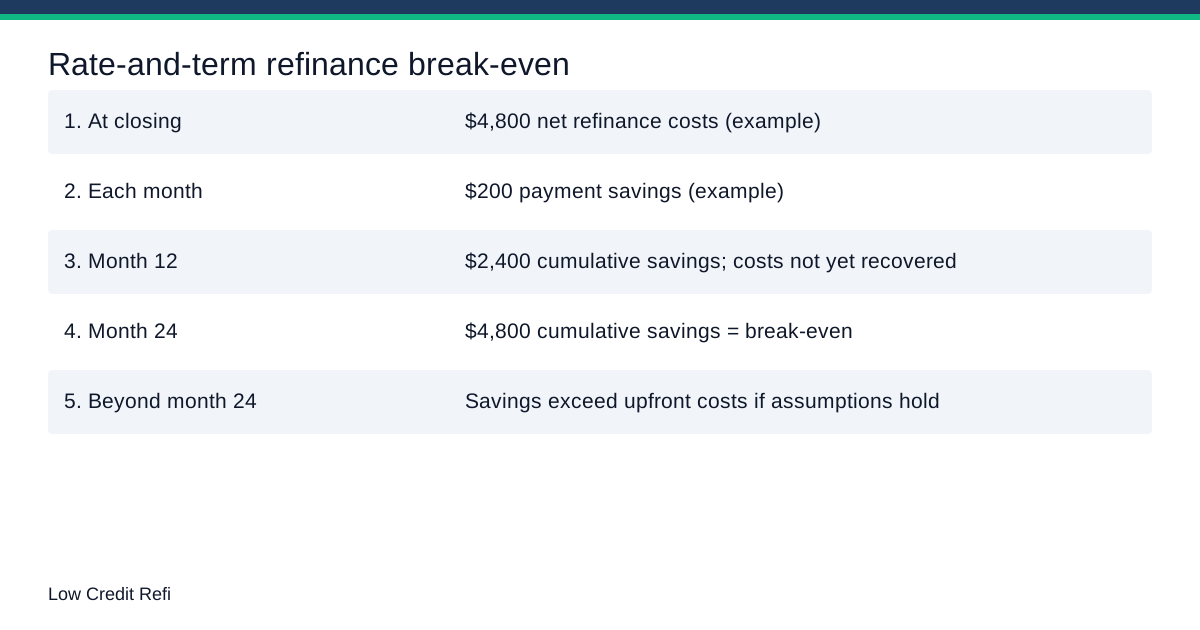
Refinancing typically involves closing costs ranging from 2% to 6% of the loan amount. Be prepared to cover these expenses upfront or roll them into your loan.Interest Rate Expectations and Financial Benefits
Borrowers with credit scores in the 580-620 range may face interest rates 0.5% to 1.5% higher than those with excellent credit. However, even with slightly higher rates, refinancing can still lead to significant financial benefits:
- Lowering your monthly payment.
- Consolidating high-interest debt with a cash-out refinance.
- Switching from an adjustable-rate mortgage to a fixed-rate loan for stability.
When Does Refinancing Make Sense?
Expert Tip
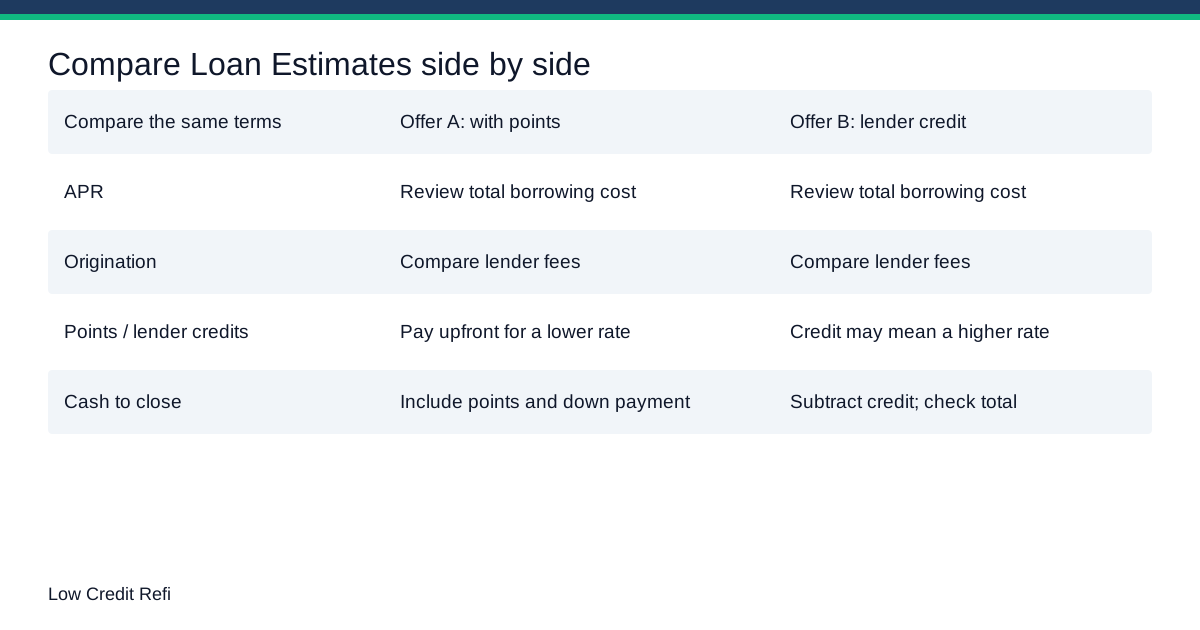
Compare Loan Estimates for the same loan type and term. Include closing costs when calculating whether refinancing saves money.
People looking into 580 credit score mortgage will find this information valuable.
Refinancing is a smart move if:
- You can lower your interest rate by at least 0.5%.
- You want to eliminate private mortgage insurance (PMI).
- You need cash for home improvements or debt consolidation.
- You want to switch from an ARM to a fixed-rate loan.
Take the Next Step
Refinancing with a 580 credit score—or slightly higher—can be a reality with the right approach. The first step is to explore lenders that specialize in low-credit-score programs and get pre-qualified. Pre-qualification typically involves a soft credit pull and gives you an accurate picture of your refinancing options.
Don’t let a low credit score stop you from improving your financial future. Start comparing lenders today and take control of your mortgage journey, particularly if you are considering refinancing with 580 credit score!
Frequently Asked Questions
What is the minimum credit score for FHA refinancing?
FHA loans typically allow a minimum credit score of 580 for refinancing. Some lenders may accept scores as low as 500 with a larger down payment, but for refinancing, 580 is the common threshold. Meeting this requirement opens access to FHA streamline and rate-and-term refinance programs.
Can I refinance with a 580 credit score and no equity?
Yes, it is possible through FHA streamline refinance, which does not require an appraisal or equity verification. This program is designed for borrowers with existing FHA loans and can lower your rate or term. However, you must be current on payments and demonstrate a net tangible benefit.
What factors do lenders consider besides credit score for refinancing?
Lenders evaluate your debt-to-income ratio, employment history, and current income stability. They also review your payment history on the existing mortgage and any recent late payments. A steady income and low DTI can offset a lower credit score, improving approval odds.
How can I improve my chances of refinancing with a 580 credit score?
Focus on reducing credit card balances to lower utilization, making all payments on time, and avoiding new credit inquiries. Also, consider adding a co-borrower with better credit or exploring FHA loans, which have more lenient requirements. Demonstrating stable income helps as well.
Key Takeaways
- Understanding your options for refinancing with 580 credit score is the first step
- Explore related options like refinance low credit score
- Explore related options like 580 credit score mortgage
- Getting pre-qualified helps you understand your real options

