Compare Live Mortgage & Home Equity Rates
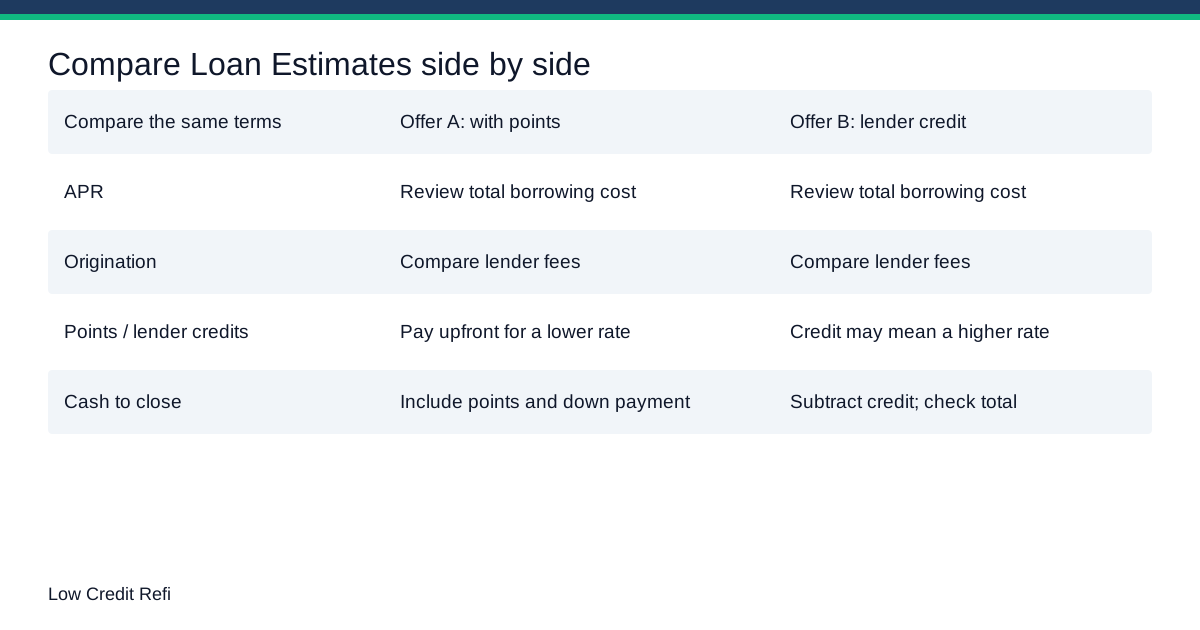
Compare current APRs, points, fees, and estimated monthly payments from participating lenders below.
Mortgage rates
Mortgage Refinancing with a 600 Credit Score: Everything You Need to Know
Quick Answer: Refinance rates for a 600 credit score are typically higher than those for borrowers with excellent credit, as lenders view lower scores as higher risk. However, options like FHA and VA loans can offer competitive rates. Shopping around and comparing lender offers is key to finding the best rate for your situation.
When it comes to refinancing with a 600 credit score, you're not just making a financial decision — you're building a better future. While having a credit score of 600 can present challenges, it's far from a roadblock. This guide takes you step-by-step through how your score impacts refinance rates 600 credit score and what you can do to secure the best possible deal.
How Does Your Credit Score Impact Mortgage Rates?
It’s All in the Numbers.
Mortgage lenders use "loan-level pricing adjustments" (LLPAs) to determine your rate based on your credit score and financial risk level. With a 600 credit score, you're considered a higher-risk borrower, which typically equates to higher interest rates. However, understanding how this works can help you navigate the process and even negotiate better terms.What Does This Mean for Your Rate?
| Credit Score Range | Rate Premium (Approx.) |
|---|---|
| 760+ | Base rate |
| 720-759 | +0.125% to +0.25% |
| 600-619 | +0.875% to +1.25% |
| 580-599 | +1.25% to +1.75% |
Pro Tip: You don’t need to accept the first offer you receive. Different lenders calculate LLPAs differently, and shopping around can save you thousands over the life of your loan, especially if you have refinance rates 600 credit score in mind.
Compare Loan Types: Your Perfect Fit at a 600 Credit Score
FHA Refinance: Best for Accessibility
- Why Choose FHA? Federal Housing Administration (FHA) loans are specifically designed for borrowers with lower credit scores, making it easier for those with a 600 score to qualify.
- Typical Rate: Market base + 0.375% to 0.625%.
- Example: If the base rate is 6.25%, you might expect a rate of around 6.625%–6.875%.
VA Refinance: A Veteran's Advantage
For our nation’s heroes, VA loans offer unparalleled flexibility and lower rates.- Typical Rate: Market base + 0.25% to 0.50%.
- Why It Stands Out: VA loans often provide the most competitive rates, even if your credit score is in the 600 range.
- No PMI: Unlike many other loan types, VA loans don’t require private mortgage insurance (PMI), which can save you hundreds of dollars per year.
Conventional Refinance: Elevate Your Options
Heads Up! While conventional loans are more difficult to qualify for with a 600 credit score, they might still be an option if you have other strong financial factors, like substantial home equity.- Typical Requirement: A score of 620 or higher is usually needed for conventional refinancing.
- Why Wait? Improving your credit score even slightly — from 600 to 620 — can open the door to better rates and terms.
Beyond Credit Score: Factors That Influence Rates
While your credit score is a significant factor in determining refinance rates 600 credit score, other elements also play a role. Knowing these can help you improve your overall loan profile.
Loan-to-Value Ratio (LTV)
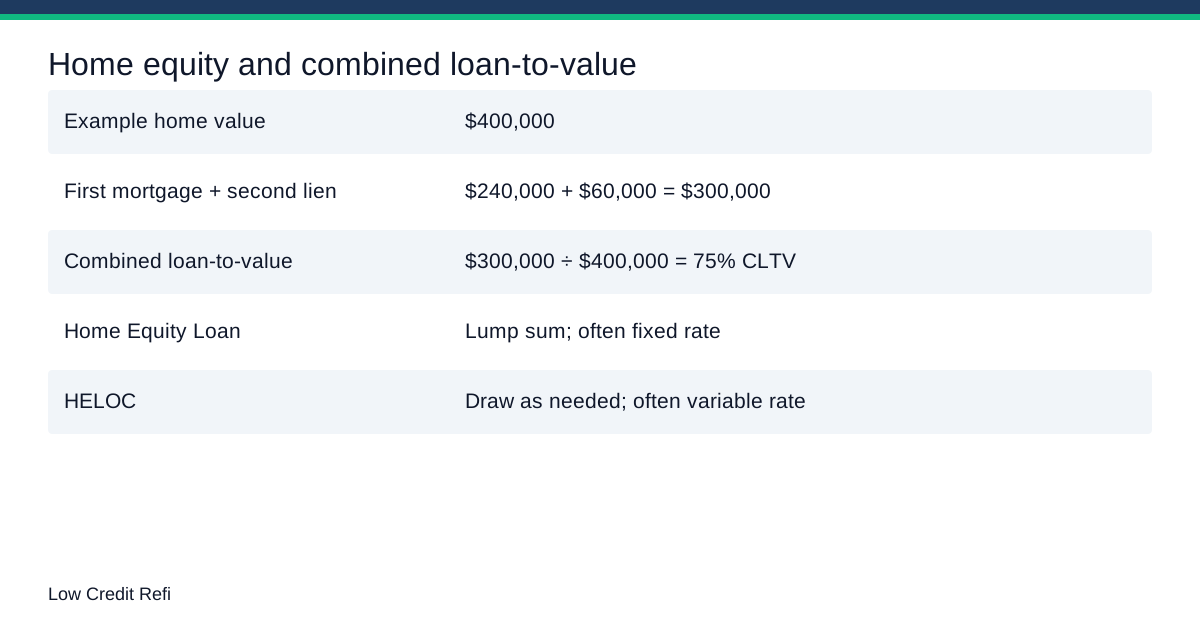
- Lower is better: Lenders typically offer better rates to borrowers with a lower LTV ratio. For example, if your home is worth $300,000 and you owe $180,000, your LTV is 60%, which is favorable.
- Target LTV: A ratio below 80% can lead to lower rates and may eliminate the need for PMI.
Loan Purpose and Type
- Rate-and-Term Refinance: This is used to adjust the interest rate or loan term and typically comes with lower premiums.
- Cash-out Refinance: Borrowing against your home’s equity for cash leads to higher interest rates, often adding 0.25%–0.50% to your rate.
Real-Life Scenarios: What Kind of Rate Can You Expect?
Let’s break it down with a few examples:
- Scenario 1: 600 credit score, 75% LTV, FHA rate-and-term refinance.
- Scenario 2: 600 credit score, 60% LTV, VA loan.
How to Get the Absolute Best Rate — Even at 600
1. Comparison Shop
Not all lenders treat a 600 credit score the same. Some specialize in helping borrowers with poor or fair credit. Collect rate quotes from at least five lenders to ensure you’re getting the most competitive rate, especially when considering refinance rates 600 credit score.2. Maximize Strengths
Even with a 600 credit score, you can improve your overall financial profile by focusing on compensating factors:- High equity: The more equity you have, the better your chances of securing a favorable rate.
- Large cash reserves: Demonstrating savings or liquid assets can reduce perceived risk.
- Low debt-to-income (DTI) ratio: A lower DTI signals to lenders that you can comfortably manage monthly payments.
Is Refinancing Worth It for a 600 Score?
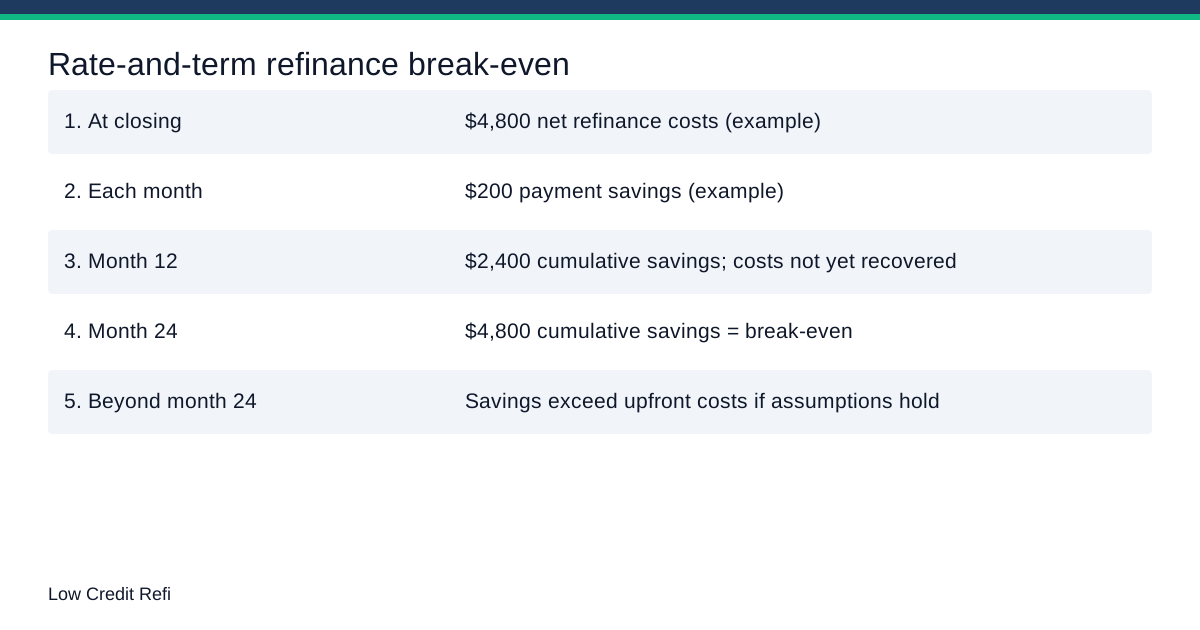
Even at higher rates, refinancing can help you lower your monthly payments or consolidate debt. To determine whether refinancing makes sense, calculate your break-even point:Example:
- Current rate: 8.00%.
- New rate (FHA): 7.00%.
- Savings: ~$200 per month on a $240,000 loan.
This is especially relevant for those interested in 600 score mortgage rates.
Insight: If you plan to stay in your home for longer than the break-even period, refinancing is likely a smart financial move, particularly with refinance rates 600 credit score in mind.
Key Takeaways
- Stay informed: Understanding rate premiums and how lenders calculate them empowers better decision-making.
- Prep your finances: Improving even one aspect of your financial profile can make a big difference in your rate, especially when dealing with refinance rates 600 credit score.
- Work smart: Shop around, plan carefully, and use your strengths to negotiate better terms.
Refinancing with a 600 credit score may come with challenges, but with the right approach and preparation, you can still secure terms that align with your financial goals. Take the time to explore your options and make informed decisions that set you up for long-term success, even considering refinance rates 600 credit score.
Official Resource: For authoritative guidance, see the VA home loan types and refinancing options.
Key Takeaways
- Understanding your options for refinance rates 600 credit score is the first step
- Explore related options like 600 score mortgage rates
- Explore related options like fha rates 600 credit
- Getting pre-qualified helps you understand your real options

