Compare Live Mortgage & Home Equity Rates
Compare current APRs, points, fees, and estimated monthly payments from participating lenders below.
Mortgage rates
Best Refinance Loan Options for Bad Credit Borrowers
Quick Answer: Refinance loans for bad credit are available through programs like FHA loans, which accept credit scores as low as 580 with 3.5% equity, or 500-579 with 10% equity. VA loans for eligible veterans have no minimum credit score requirement. USDA loans also allow scores as low as 580. These options help borrowers lower payments or access equity.
Having a low credit score doesn’t mean refinancing is out of reach. The mortgage industry has developed multiple loan programs specifically designed to help borrowers with credit challenges access refinancing opportunities, including refinance loans for bad credit. In this comprehensive guide, we’ll explore every available refinancing program for borrowers with bad credit, compare the pros and cons of each option, and provide actionable strategies to improve your approval odds.
Understanding the Bad Credit Refinancing Landscape
Before diving into specific programs, it’s important to understand how the mortgage industry defines bad credit and what options are genuinely available. Generally, credit scores below 670 are considered subprime, with scores below 580 classified as poor credit. However, the good news is that several government-backed and specialized programs cater specifically to borrowers in these credit tiers, including refinance loans for bad credit.
The key to successful refinancing with bad credit is matching your specific situation to the right loan program. Factors beyond your credit score—such as your home equity, income stability, military service history, and the nature of your credit challenges—play critical roles in determining which programs offer the best path forward, especially when considering refinance loans for bad credit.
Why Refinance Loans for Bad Credit Are Important
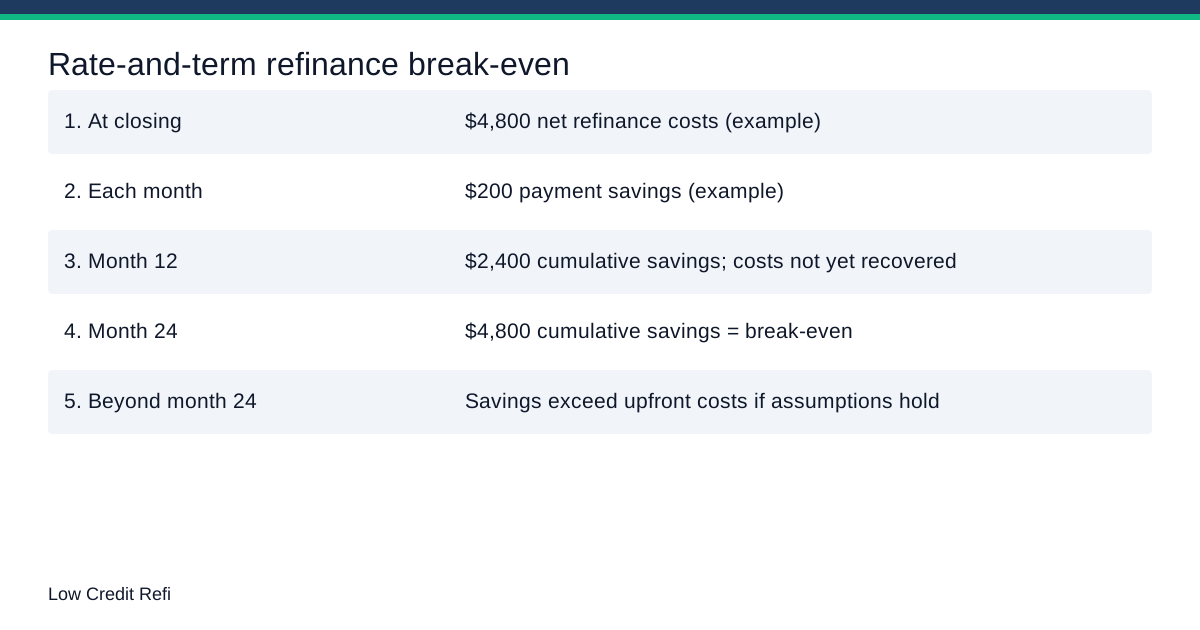
Refinancing can help bad credit borrowers lower their monthly payments, reduce interest rates, or access home equity to cover expenses. With the average savings from refinancing ranging between $150 to $300 per month, these options can significantly improve financial stability, even for those with low credit scores. Over the life of a loan, this can amount to tens of thousands of dollars in savings, making refinance loans for bad credit a crucial consideration.
Top Refinancing Programs for Borrowers With Bad Credit
1. FHA Refinancing: The Gold Standard for Low Credit Scores
The Federal Housing Administration (FHA) insures mortgages specifically designed for borrowers who don’t qualify for conventional financing. FHA refinancing is one of the most popular options for homeowners with credit scores between 500 and 619, making it a top choice among refinance loans for bad credit.
This is especially relevant for those interested in bad credit refinance options.
Program Details and Requirements
- FHA refinancing accepts credit scores as low as 580 with the standard 3.5% equity requirement.
- Borrowers with scores between 500 and 579 may still qualify, but they need at least 10% equity in their home.
- The maximum debt-to-income (DTI) ratio can reach 57% with compensating factors, such as a strong employment history or significant savings.
- Rate and Term Refinances: Replace your current mortgage with an FHA loan featuring better terms.
- FHA Streamline Refinances: A simplified process for existing FHA borrowers with reduced documentation and no appraisal requirements.
- Cash-Out Refinances: Access up to 80% of your home’s value, though higher credit scores are typically required for this option.
- FHA refinancing offers the most flexible underwriting guidelines in the industry.
- Lenders consider compensating factors, such as high equity or stable employment, to offset credit challenges.
- Family gift funds can be used to cover closing costs.
- FHA loans require mortgage insurance premiums (MIP), including an upfront premium of 1.75% and annual premiums ranging from 0.45% to 1.05%.
- For loans with less than 10% equity, MIP remains for the life of the loan. This can add significantly to the overall cost.
2. VA Refinancing: The Best Option for Veterans and Military Members
The Department of Veterans Affairs (VA) offers refinancing programs with no minimum credit score set by the VA itself, making it an exceptional option for eligible veterans and active-duty service members with credit challenges. This includes those seeking refinance loans for bad credit.
Eligibility Requirements
- Veterans who served at least 90 consecutive days during wartime or 181 days during peacetime.
- National Guard and Reserve members with at least six years of service.
- Surviving spouses of service members who died in the line of duty or from a service-connected disability.
- Interest Rate Reduction Refinance Loan (IRRRL): A streamlined process for existing VA loan holders, often requiring no appraisal or income verification.
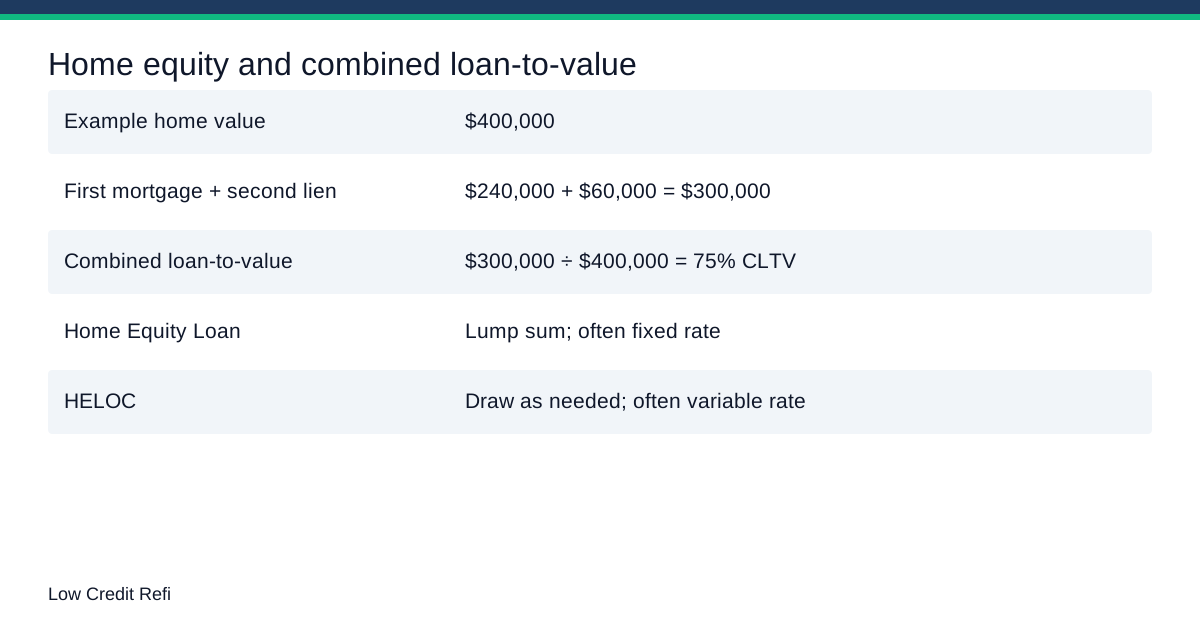
- Cash-Out Refinancing: Access up to 100% of your home equity, depending on the lender.
- Rate and Term Refinances: Convert non-VA loans into VA loans for eligible veterans.
- No VA-mandated minimum credit score; individual lenders set their own requirements, typically in the 580 to 620 range.
- VA loans require no private mortgage insurance (PMI), saving thousands over the life of the loan.
- Funding fees can be rolled into the loan amount, reducing upfront costs.
- While the VA doesn’t enforce a credit score minimum, individual lenders may still decline applicants with very low scores.
- Veterans with service-connected disabilities may qualify for a waiver of the funding fee, reducing costs even further.
3. Non-QM Loans: Maximum Flexibility for Complex Situations
Expert Tip
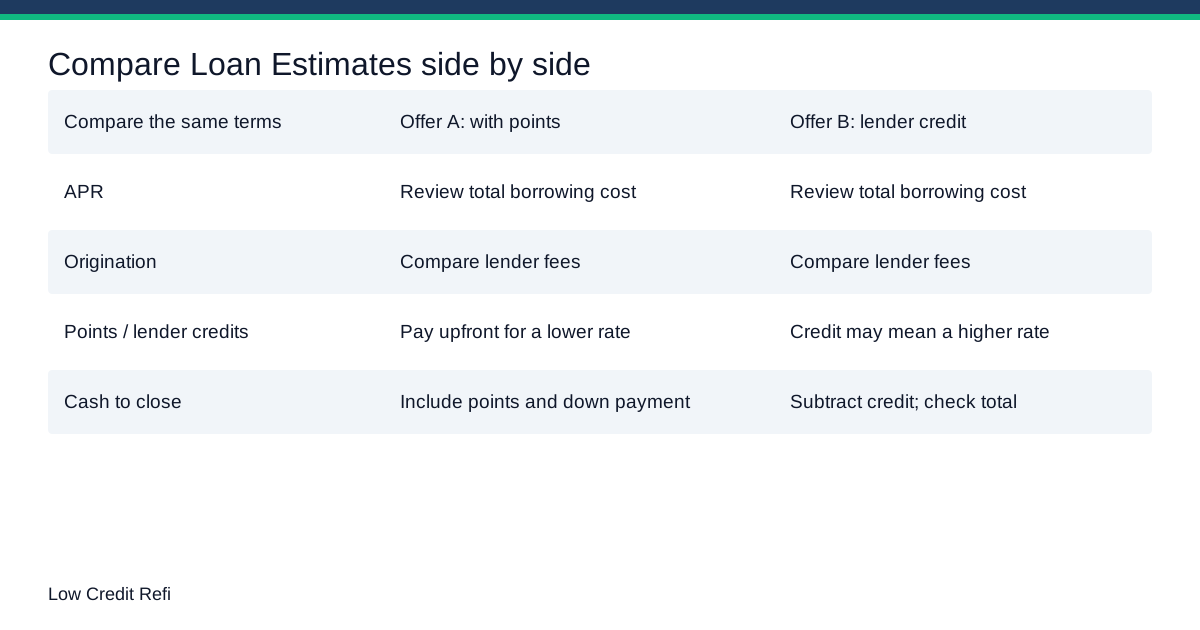
Compare Loan Estimates for the same loan type and term. Include closing costs when calculating whether refinancing saves money.
People looking into refinance with poor credit will find this information valuable.
Non-Qualified Mortgage (Non-QM) lenders have emerged as a valuable option for borrowers who fall outside traditional lending guidelines. These loans are particularly beneficial for self-employed borrowers, real estate investors, and individuals with recent major credit events, including those looking for refinance loans for bad credit.
How Non-QM Loans Work Non-QM loans use alternative underwriting methods, such as:
- Bank statement income verification instead of tax returns.
- Asset depletion methods for retirees with significant savings.
- More flexible seasoning requirements for bankruptcies, foreclosures, or short sales.
- Many Non-QM lenders accept credit scores as low as 500, though requirements vary significantly.
- Borrowers with recent credit challenges may find options, provided they offer proper documentation and a clear explanation for their financial setbacks.
- Non-QM loans often come with higher interest rates, typically 1% to 3% above conventional loans.
- Closing costs may also be higher, and loan amounts may be more limited.
4. Portfolio Loans: Customized Solutions from Local Lenders
Portfolio loans are mortgages that banks and credit unions keep in their own portfolios rather than selling to investors. This allows for more flexible underwriting based on the overall borrower relationship, making them a viable option for those seeking refinance loans for bad credit.
Unique Advantages
- Portfolio lenders can approve loans that don’t meet standard guidelines, provided they view the borrower as a good risk.
- These loans often weigh compensating factors heavily, such as high income, significant assets, or a strong banking relationship.
- Community banks and credit unions are the most likely to offer portfolio loans.
- Establishing a relationship with the institution—such as opening a savings or checking account—can improve your approval odds.
Making the Right Choice for Your Situation
The best refinance loan program depends on your specific circumstances. Consider these decision factors when evaluating your options, especially if you are looking into refinance loans for bad credit:
- Choose FHA Refinancing When: Your credit score falls between 580 and 619, and you need flexible underwriting. FHA loans are ideal for borrowers with limited equity but stable income.
- Choose VA Refinancing When: You are a veteran or active-duty service member seeking to eliminate private mortgage insurance and lower monthly payments.
- Choose Non-QM Loans When: Traditional lenders have denied you for reasons like income documentation issues or recent credit events, and you’re willing to accept higher rates for approval.
- Choose Portfolio Loans When: You have a strong banking relationship or unique financial circumstances that don’t fit into standard loan programs.
Strategies to Maximize Your Approval Odds
Regardless of the program you choose, the following strategies can help improve your chances of approval and secure better terms:
- Emphasize Compensating Factors:
- Document Credit Explanations:
- Show Recent Improvement:
- Work With Specialized Lenders:
Take the First Step Today
Understanding your options is the first step toward successful refinancing. Start by getting pre-qualified with lenders experienced in working with borrowers in your credit range. Pre-qualification won’t impact your credit score and provides a realistic picture of your options, including potential rates and terms.
Refinancing with bad credit is possible. With the right approach, you can secure better terms, lower monthly payments, and improve your overall financial stability. Don’t let a low credit score stop you—explore your refinance options today, especially refinance loans for bad credit!
Frequently Asked Questions
What credit score do I need for an FHA refinance?
FHA refinancing accepts credit scores as low as 580 with a 3.5% equity requirement. Borrowers with scores between 500 and 579 may still qualify but need at least 10% equity. Lenders also consider compensating factors like stable income and savings.
Can I refinance with a credit score of 580?
Yes, you can refinance with a credit score of 580 through FHA loans, which require 3.5% equity. VA loans for eligible veterans have no minimum credit score, and USDA loans also accept scores as low as 580. Your options depend on your equity and income.
What are the best refinance options for bad credit?
The best options include FHA refinancing for scores as low as 500, VA loans for veterans with no minimum score, and USDA loans for rural homeowners with scores down to 580. Conventional loans typically require higher scores, so government-backed programs are often more accessible.
How much equity do I need to refinance with bad credit?
For FHA loans, you need at least 3.5% equity if your credit score is 580 or higher, or 10% equity if your score is between 500 and 579. VA loans may require no equity, while USDA loans typically require no equity but have income limits.
Key Takeaways
- Understanding your options for refinance loans for bad credit is the first step
- Explore related options like bad credit refinance options
- Explore related options like refinance with poor credit
- Getting pre-qualified helps you understand your real options

