Compare Live Mortgage & Home Equity Rates
Compare current APRs, points, fees, and estimated monthly payments from participating lenders below.
Mortgage rates
Discover the Key to Refinancing Savings: Loan-to-Value (LTV)
Imagine opening the door to lower mortgage rates, reduced payments, or unlocking cash from your home’s equity to fuel your dreams. That’s the magic of mastering your Loan-to-Value (LTV) ratio! Let’s dive in and reveal how LTV can transform your refinancing journey.LTV Explained: The Building Block of Refinancing Success
Quick Answer: Loan-to-value (LTV) is the ratio of your mortgage balance to your home's appraised value, expressed as a percentage. For borrowers with 580-620 credit scores, LTV helps determine refinance eligibility and terms. Lower LTV means more equity, which can improve your chances of qualifying and may reduce costs like mortgage insurance.
"LTV shows how much of your home's value you're borrowing."
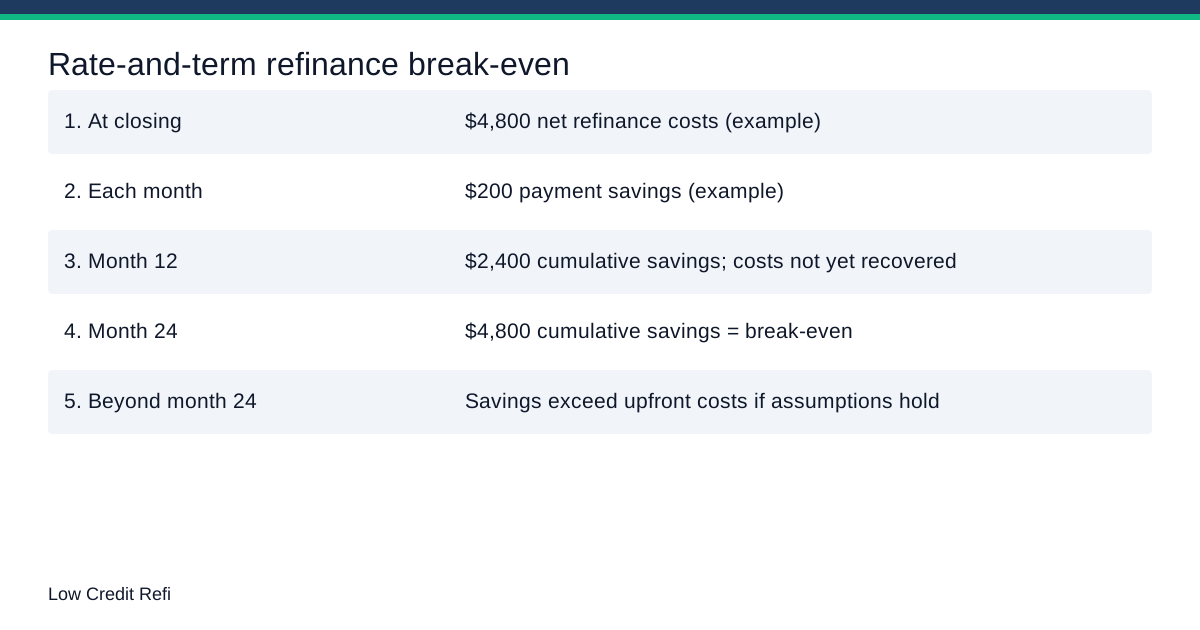
Think of it like this: the smaller the ratio, the more equity you own in your home — and equity is power! Here’s the simple formula you need to remember:
LTV Formula:
> LTV = (Loan Amount ÷ Home Value) × 100Example:
- Home Value: $400,000
- Loan Amount: $320,000
- LTV: 80% (You’re in the sweet spot!)
Why Knowing Your LTV Matters
"Think of LTV as your golden key to better refinancing options and long-term savings. Here’s how it impacts you."LTV Determines What Loans You Qualify For
Different refinance options have different LTV limits. Here’s what you can expect:| Loan Type | Max LTV Allowed | Details |
|---|---|---|
| FHA Rate-and-Term | Up to 97.75% | Ideal for those with limited equity but looking to reduce their rate. |
| FHA Cash-Out | Up to 80% | Allows you to withdraw equity but caps the amount you can borrow. |
| Conventional (w/ PMI) | Usually 80%-95% | PMI applies for LTVs above 80%. Lower LTVs may eliminate this cost. |
| VA Loans (no PMI!) | Up to 100% | Exclusive to eligible veterans and active-duty members, offering flexibility. |
Get strategic with your loan to value ltv to access the best programs!
The Relationship Between LTV and Your Interest Rate
The better your LTV, the more lenders reward you with lower interest rates. Check out this quick guide:| LTV Level | Rate Impact |
|---|---|
| 60% | Best rates possible! |
| 70% | Very competitive rates! |
| 80% | Standard rates! |
| 85%+ | Higher interest applies! |
Pro Tip: Many cost-saving refinance scenarios target an LTV of 80% or lower to avoid private mortgage insurance (PMI).
LTV Impacts Your Mortgage Insurance Requirements
- Conventional Loans: PMI is required above 80% LTV.
- FHA Loans: MIP is mandatory regardless of LTV, though it may be reduced at lower loan-to-value levels.
- VA Loans: No PMI ever — one of their biggest perks!
How To Calculate Your LTV in 3 Simple Steps
Follow these easy steps to master your LTV and unlock refinancing success:Watch Now:
This is especially relevant for those interested in ltv ratio refinance.
Step 1: Know Your Home Value
Determine your home’s current value using:- A professional appraisal (most accurate!)
- Online valuation tools (e.g., Zillow or Redfin)
- Checking local sales comps
Step 2: Confirm Your Loan Amount
Include your:- Remaining loan balance
- Any cash-out funds
- Closing costs
Step 3: Use the Formula
Remember: > LTV = (Loan Amount ÷ Home Value) × 100Example Calculation:
- Current Loan Amount: $275,000
- Home Value: $350,000
- Your LTV = 78.6% (Great!)
Key LTV Milestones You Should Know
80% LTV: Golden Standard
- No PMI required (for conventional loans)
- Access to best interest rates
90% LTV: Higher Costs Ahead
- Fewer lenders may approve
- PMI becomes pricier
97.75% LTV: FHA-Exclusive Zone
- Reserved for FHA loans
- Expect tighter terms
Top 3 Strategies to Improve Your LTV
Feeling stuck with a high LTV? Don't worry — you’ve got options!1 Pay Down Your Principal Faster
Consider these hacks:- Add $100-$200/month to your mortgage payments .
- Switch to biweekly payments (an extra full payment every year!).
2 Spruce Up Your Home To Boost Its Value
Small upgrades can lead to BIG equity boosts:- Remodel your bathroom
- Modernize your kitchen
- Boost curb appeal with landscaping
Example:
A $10,000 investment in a kitchen remodel could increase your home value by $25,000, helping you lower your loan to value ltv significantly!3 Wait for Market Appreciation
Patience pays, especially if your local property values are trending up. Monitor your market and refinance when conditions are in your favor.Industry Stats on Loan-to-Value Ratios
To give you perspective, here are some relevant statistics:- The average LTV for U.S. homeowners refinancing in 2026 was 73%, meaning most borrowers had significant equity in their homes.
- Home values have risen an average of 5-7% annually over the past decade, helping homeowners naturally improve their loan to value ltv.
- Borrowers with LTVs below 80% saved an average of 0.5% on interest rates, compared to those above that threshold.
Watch & Learn From Refinancing Experts
Pro Insight: Always ask lenders how loan to value ltv can improve your options!
Final Thoughts: Your LTV Is Your Leverage
Understanding and improving your loan-to-value (LTV) ratio is one of the most powerful moves toward achieving refinancing success. A lower LTV can unlock better interest rates, eliminate PMI, and save you thousands over your loan’s life.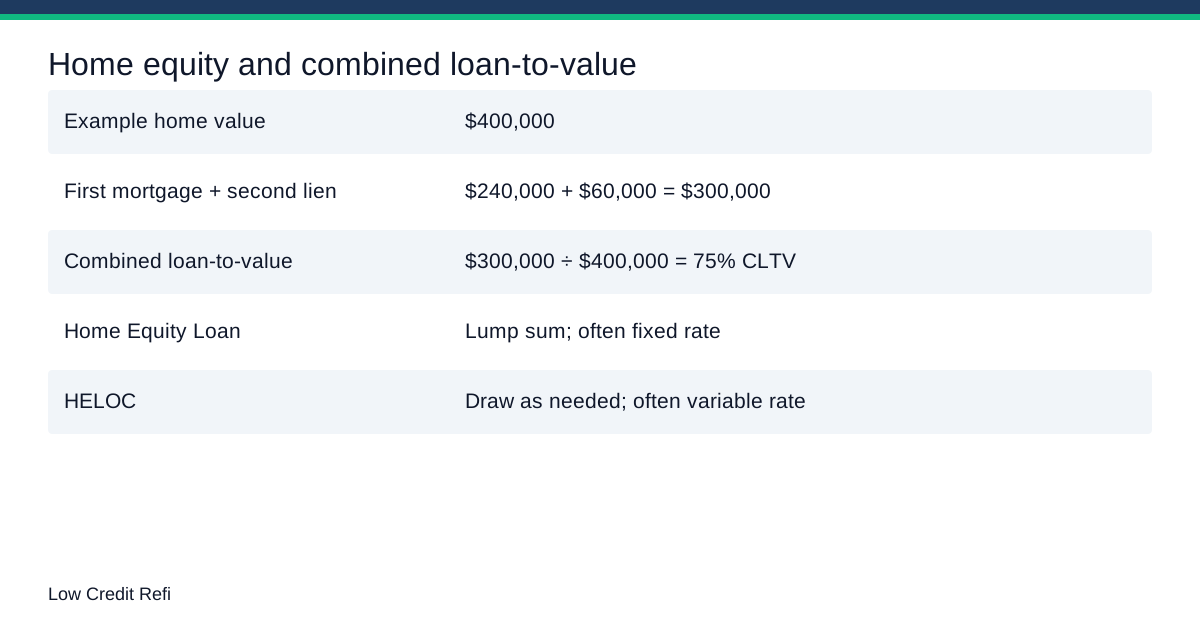
Take control by calculating your LTV, exploring your options, and working to boost your home’s equity. Whether through paying down your loan or increasing your property value, every step brings you closer to financial freedom.
Still have questions? Drop a comment or explore our helpful refinancing tools. You’re closer to saving big than you think!
Expert Tip
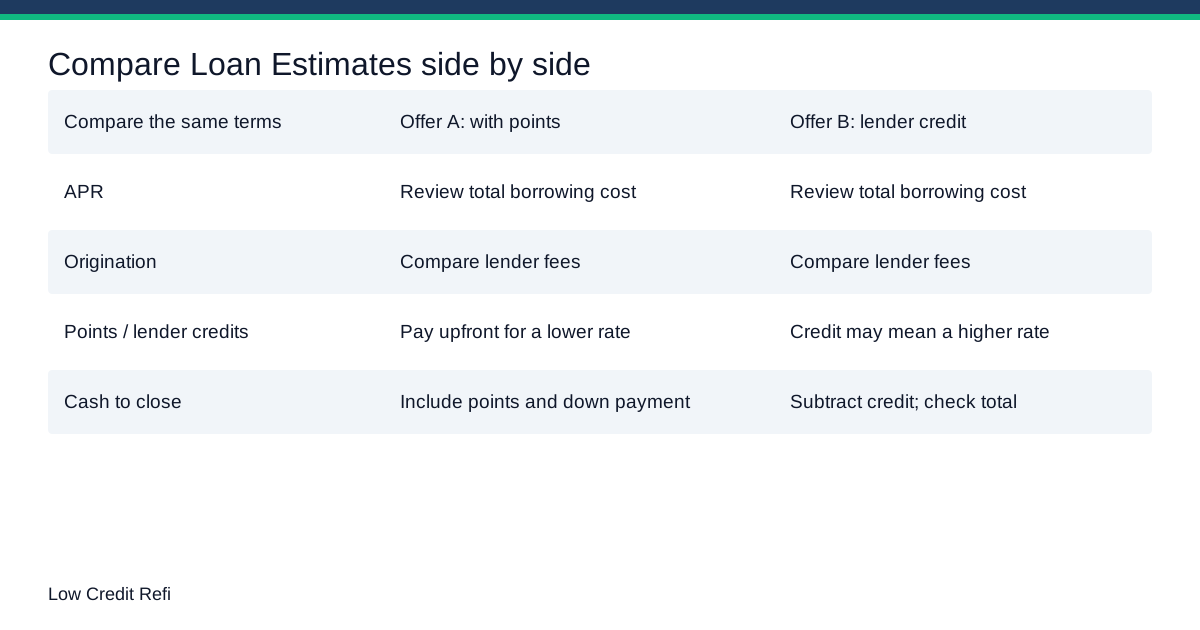
Compare Loan Estimates for the same loan type and term. Include closing costs when calculating whether refinancing saves money.
People looking into calculate ltv will find this information valuable.
Ready to Get Started?
Get your free, no-obligation quote in minutes.
Frequently Asked Questions
How is loan-to-value (LTV) calculated for refinancing?
LTV is calculated by dividing your current loan amount by your home's appraised value, then multiplying by 100. For example, if you owe $200,000 and your home is worth $250,000, your LTV is 80%. A lower LTV indicates more equity and may qualify you for better refinance options.
What is the maximum LTV for FHA refinancing with a 580 credit score?
For FHA rate-and-term refinancing, the maximum LTV is typically up to 97.75%, which can be beneficial for borrowers with limited equity. However, FHA cash-out refinancing caps LTV at 80%. Your credit score of 580 may still qualify you for these programs, but lender requirements vary.
Does a lower LTV help borrowers with 580-620 credit scores get better rates?
Yes, a lower LTV generally leads to more favorable interest rates and terms, even for borrowers with credit scores in the 580-620 range. Lenders view lower LTV as less risk, which can offset some credit concerns. An LTV of 80% or below may also eliminate the need for private mortgage insurance.
How does LTV affect mortgage insurance for borrowers with lower credit scores?
For conventional loans, private mortgage insurance (PMI) is typically required when LTV exceeds 80%. FHA loans require mortgage insurance premiums (MIP) regardless of LTV, though lower LTV may reduce the cost. VA loans have no mortgage insurance. Your credit score may influence the exact premium rates.
Key Takeaways
- Understanding your options for loan to value ltv is the first step
- Explore related options like ltv ratio refinance
- Explore related options like calculate ltv
- Getting pre-qualified helps you understand your real options


